The construction sector currently faces one of its greatest challenges: sustainability. In an environment where regulations are increasingly strict, building energy efficiency has ceased to be an option and has become a structural requirement.
To achieve this, it is not enough to install modern air conditioning systems; it is essential to act on the building envelope.
This is where solar shading systems play a decisive role. By intelligently managing the radiation that falls on facades, these solutions become the first line of defense to minimize thermal demand. In this article, we analyze how to achieve a perfect integration of solar protection in buildings to maximize energy performance and comfort.
The management of light and heat through the envelope has a direct impact on the thermal behavior of any property. To understand its importance, we must analyze three fundamental factors:
Solar heat gain and energy consumption
Large unprotected windows are primarily responsible for high solar heat gain indoors. By intercepting the sun’s rays before they pass through the glass, the heating of the space is drastically reduced, leading to a significant drop in energy consumption from air conditioning.
Passive solar shading and energy savings
Implementing passive solar shading strategies is the most cost-effective way to stabilize interior temperatures. A building that correctly utilizes exterior shading decreases its dependence on mechanical systems, which translates into real energy savings.
Thermal comfort in homes and buildings
Beyond economic benefits, avoiding overheating and glare is vital to guarantee thermal comfort. Proper shading management directly improves home energy efficiency and the well-being of occupants in any type of building.
The market offers various solutions that adapt to the structural and aesthetic needs of each facade.
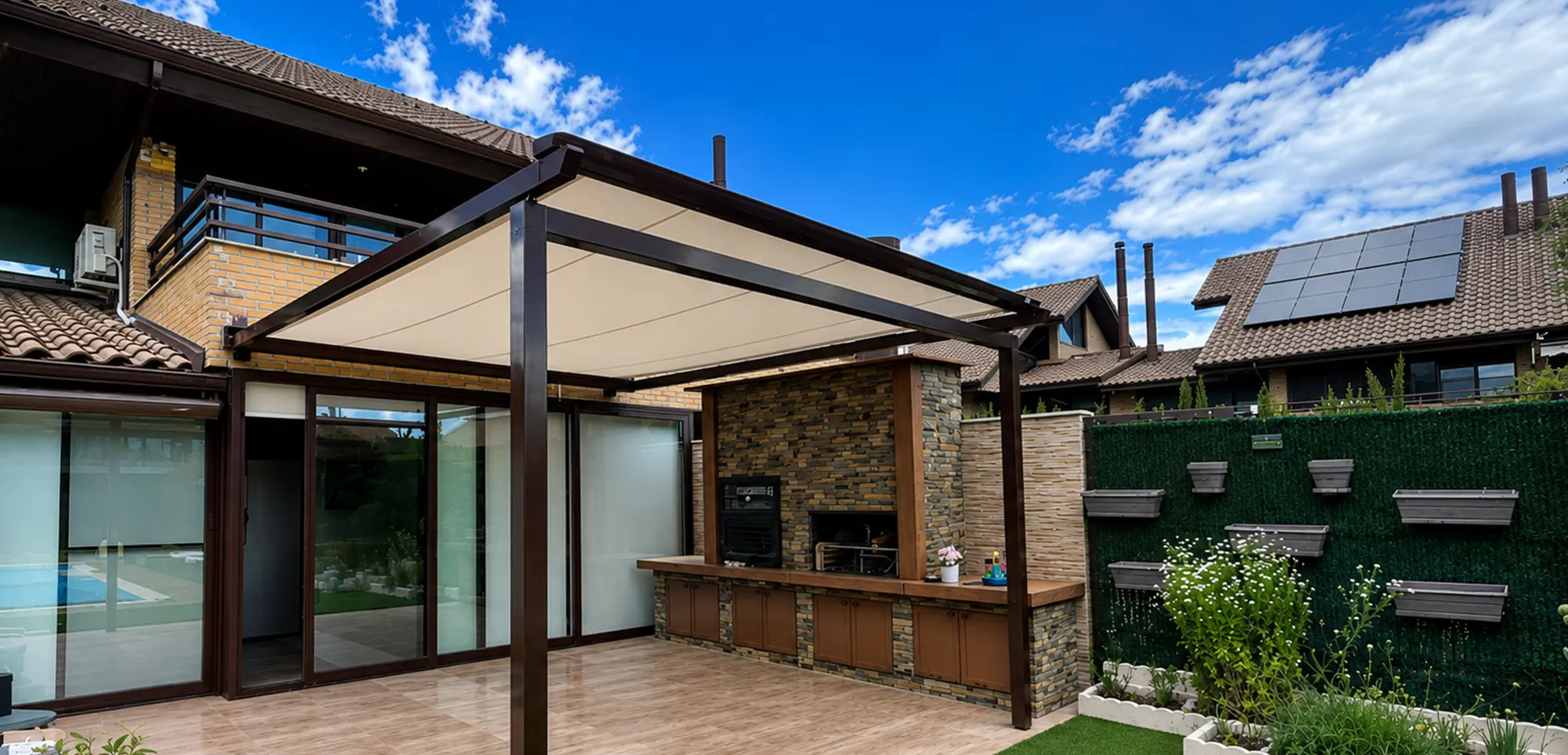
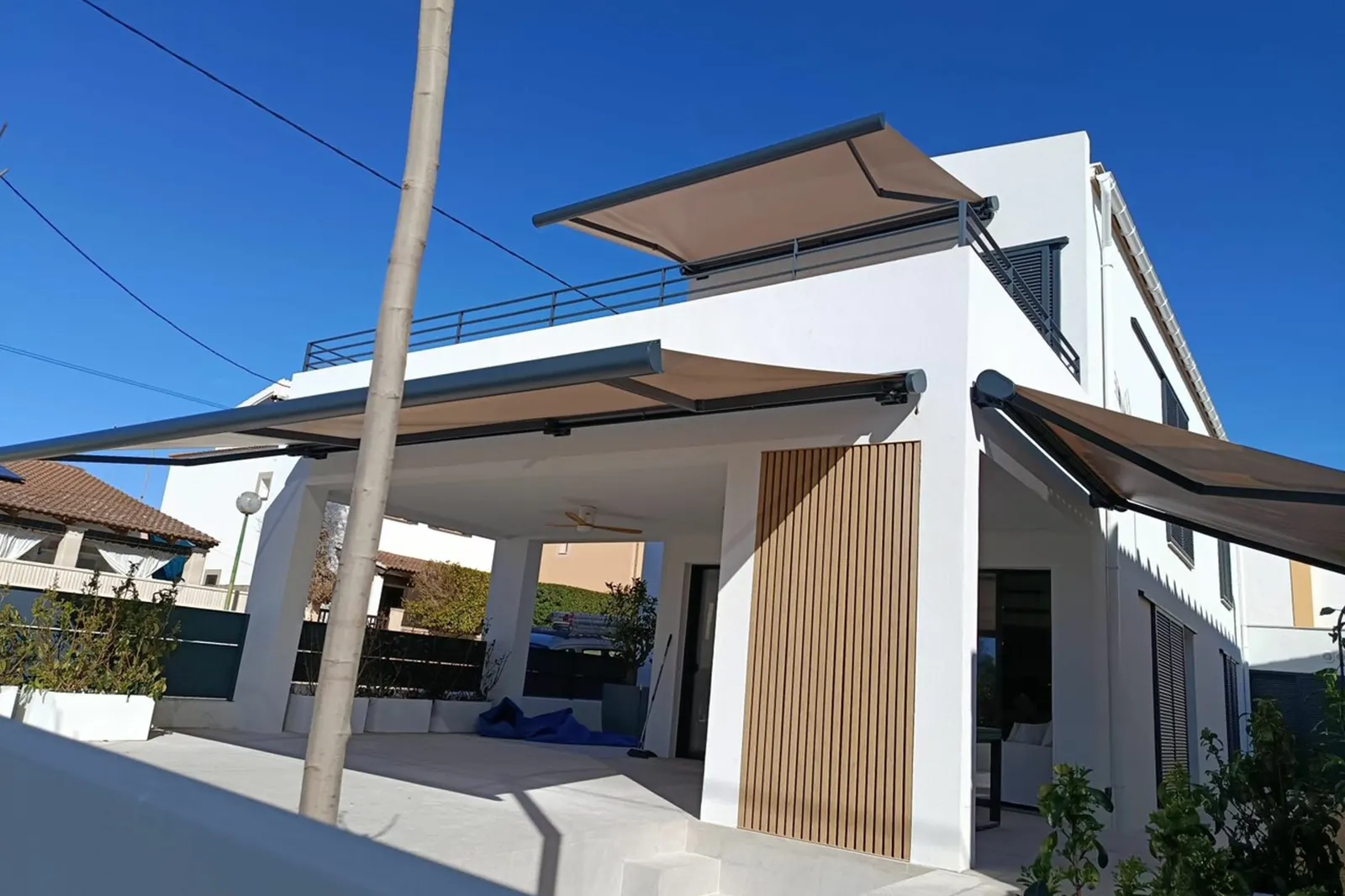
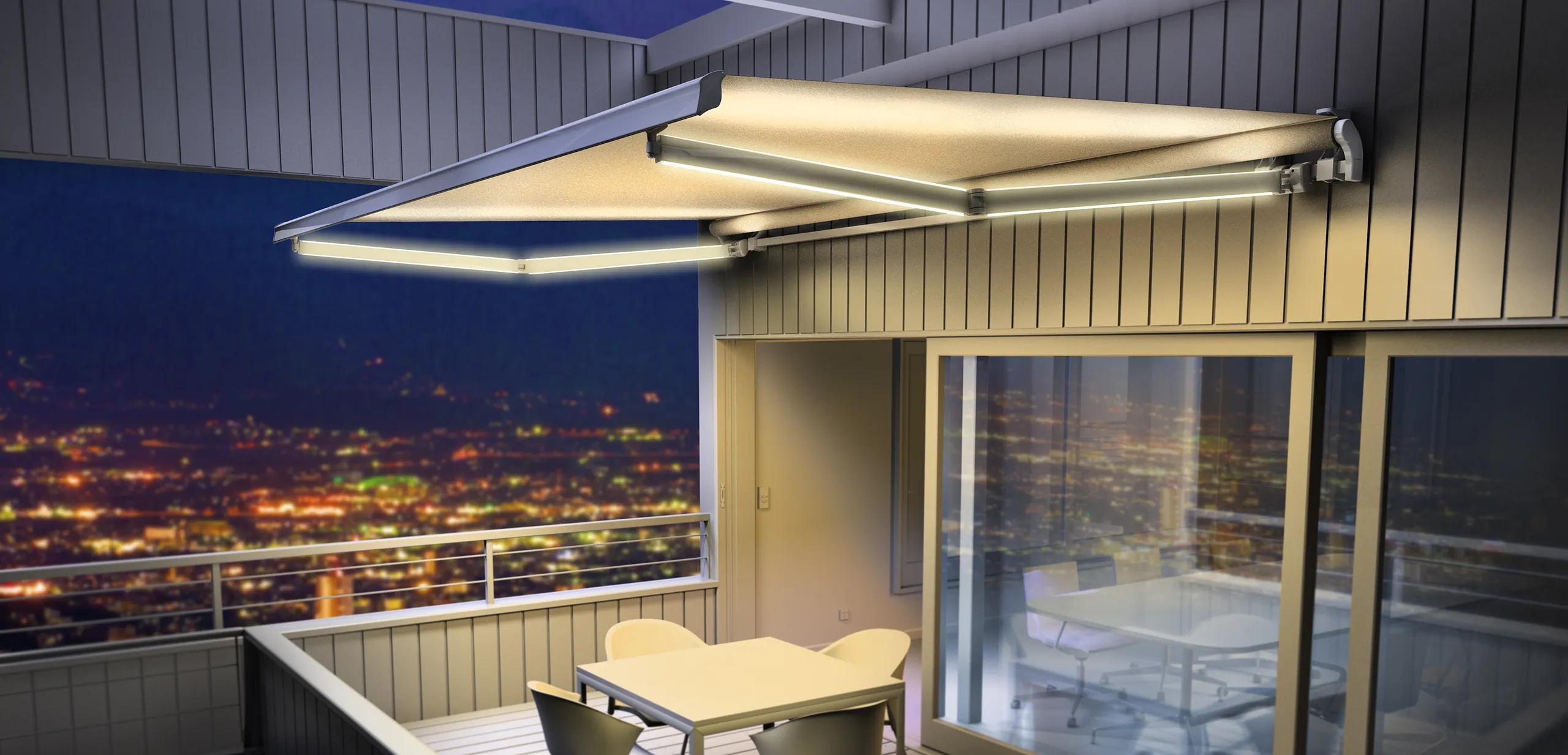
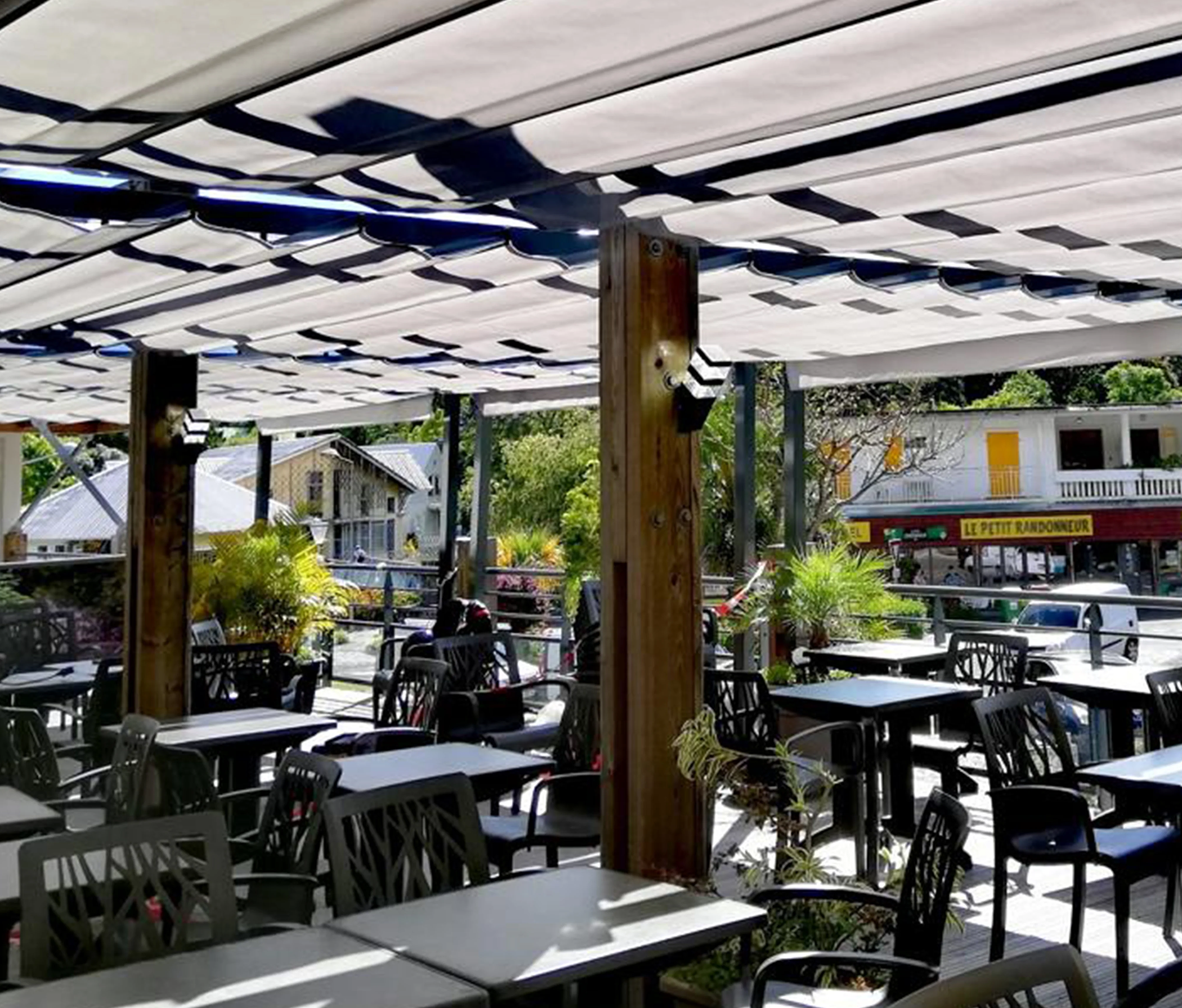
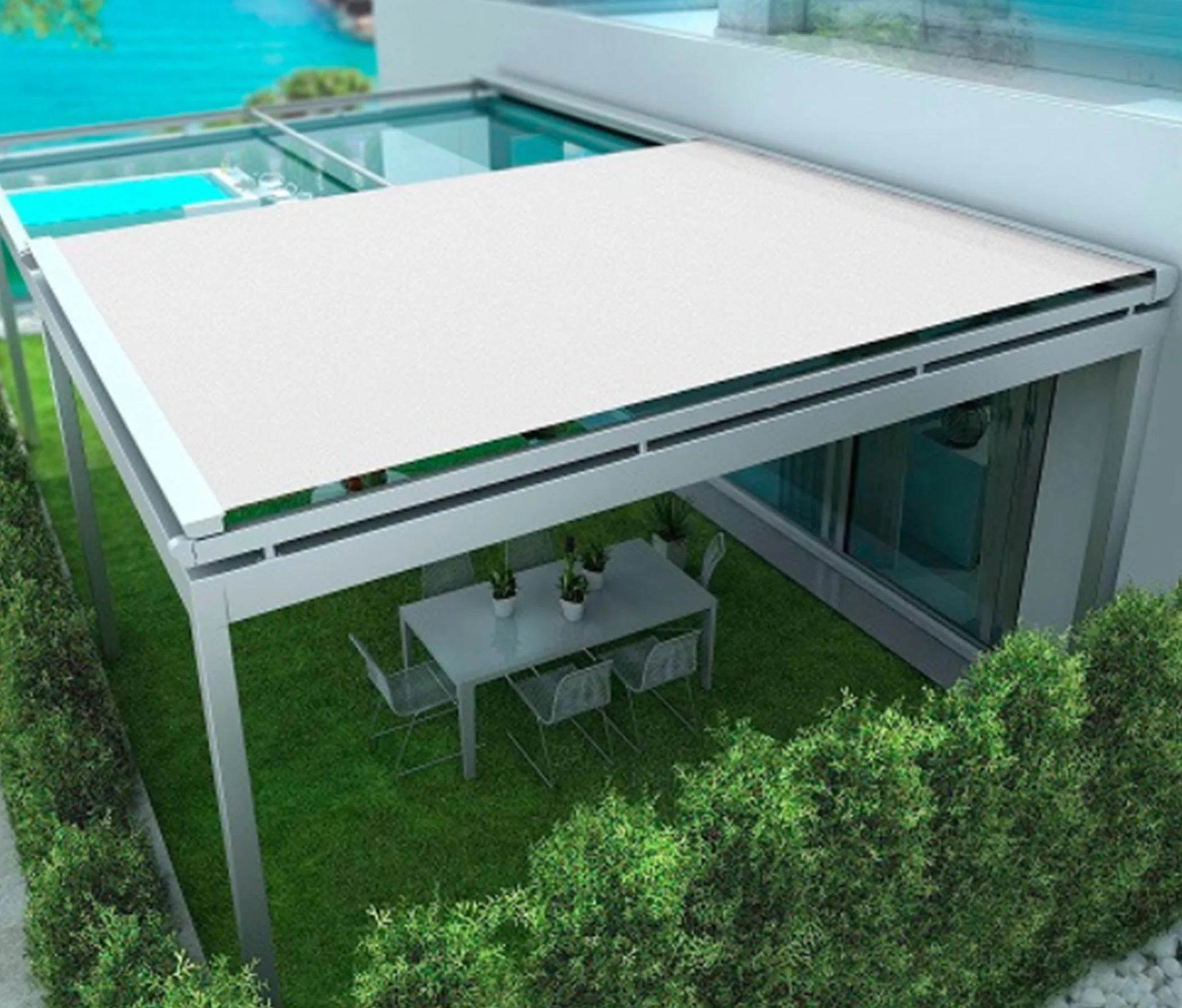
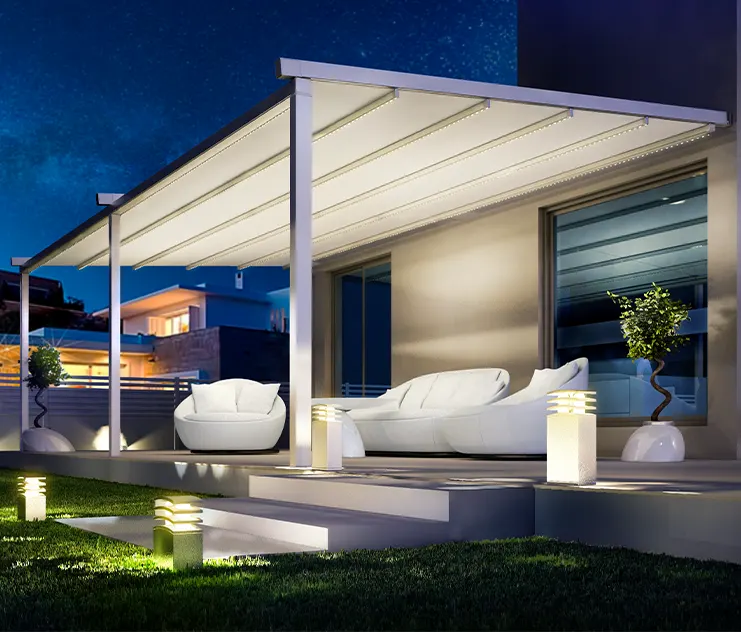
Awnings and pergolas are dynamic shields that have evolved through high technology. When deployed, they prevent direct radiation on walls and windows, creating transition shadow zones that improve the overall thermal insulation of the building by cooling the air before it enters.
You might be interested in: How to choose the right pergolas for terrace and garden in every projects
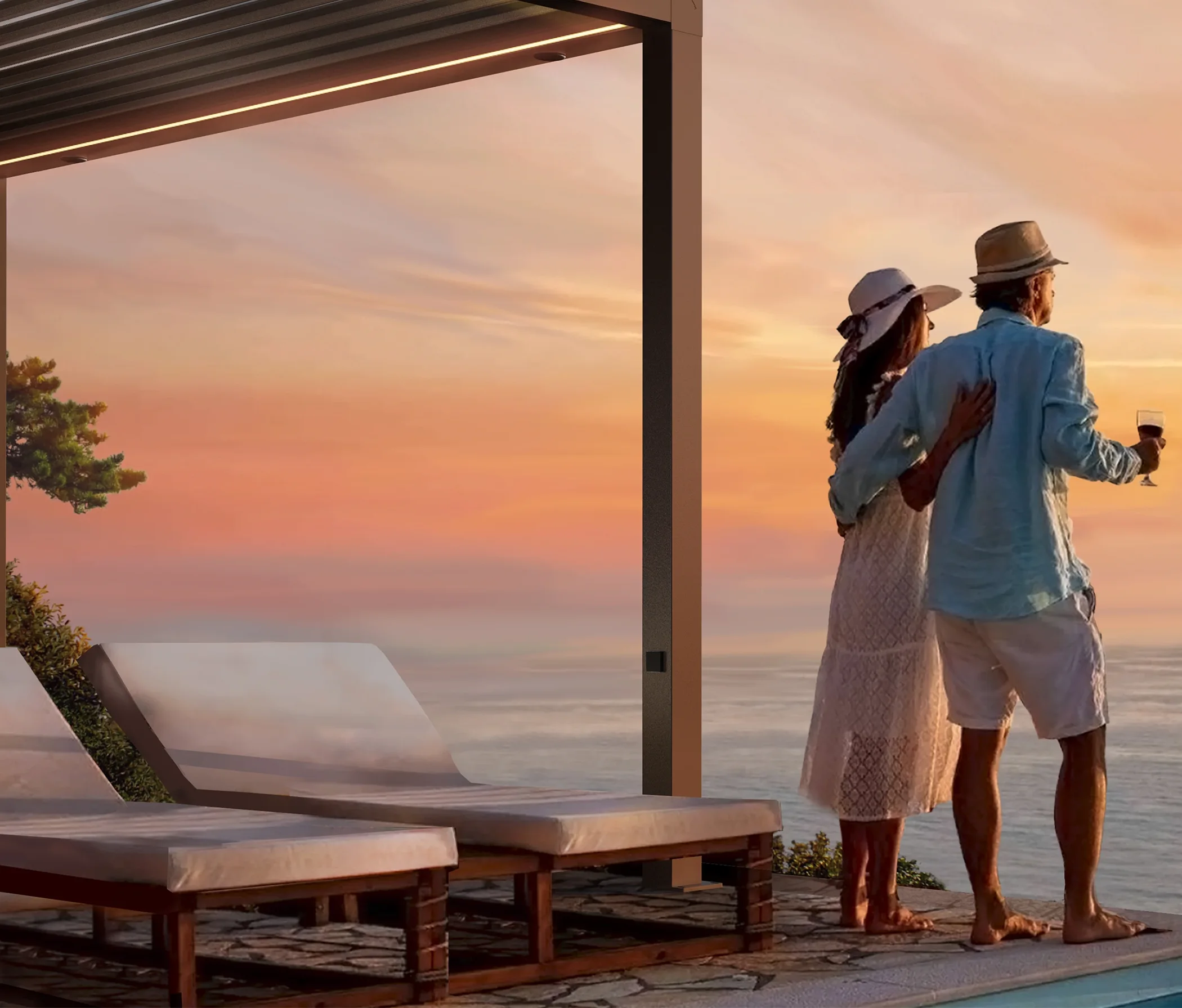
Adjustable louvers, widely used in bioclimatic pergolas, and brise-soleil systems (architectural sunshades) are excellent for regulating light entry according to the sun’s inclination at each time of year. They reduce glare and optimize the solar factor of the facade with high precision.
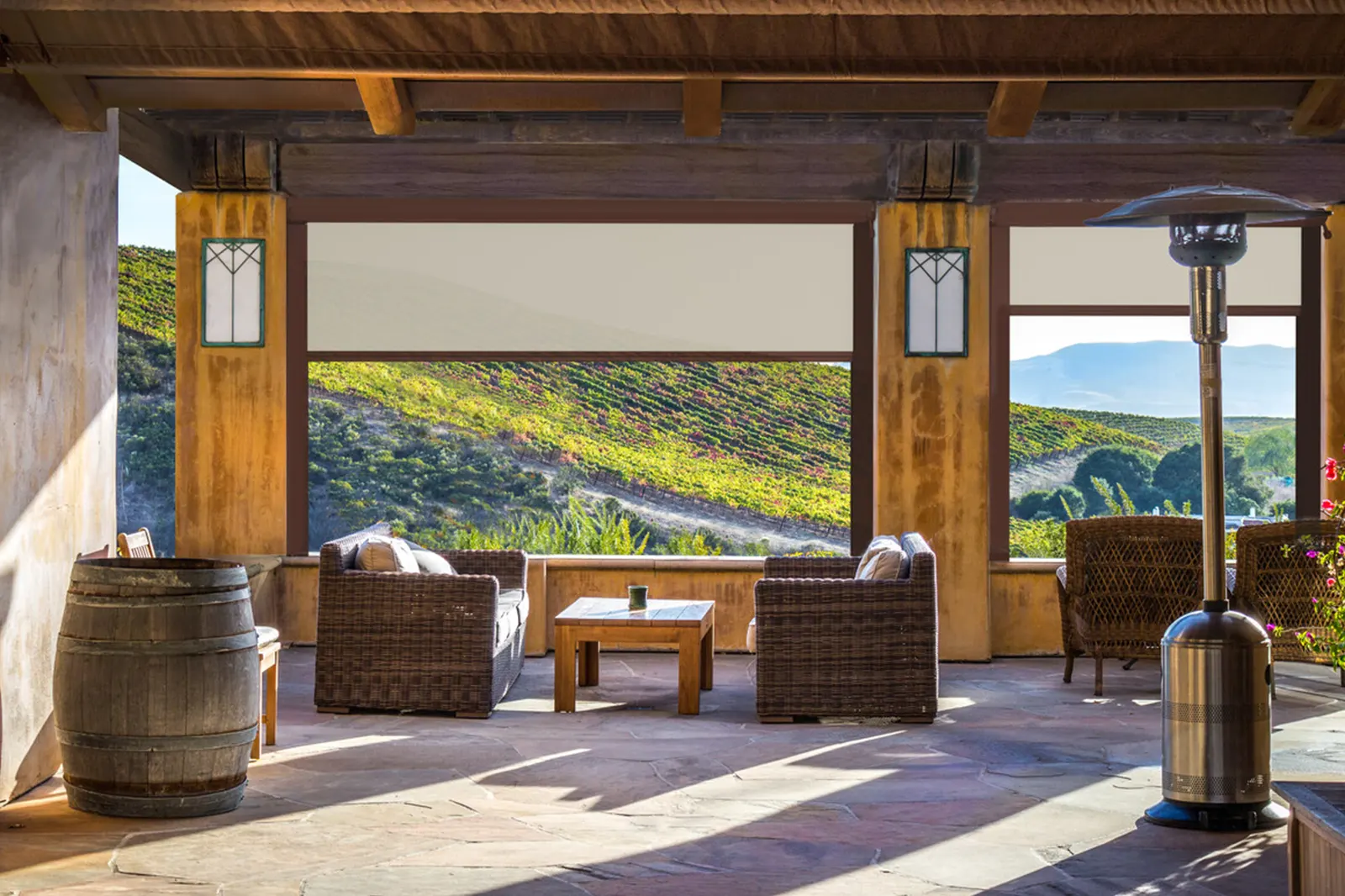
For a minimalist aesthetic, vertical awnings such as screens or retractable systems hidden in cassettes integrated into false ceilings are the answer. They act as a second skin, guaranteeing highly effective solar protection in buildings without altering the facade design.
Integration should not be a last-minute addition, but a key structural element from the initial conception of the project.
True efficiency is achieved when architectural solar control is planned from the first sketches. Through bioclimatic design, architects study the sun’s path to decide where and how to place shading elements, maximizing light in winter and blocking it in summer.
In both new construction and renovation processes, passive solar shading must harmonize with the environment. Current lacquered aluminum solutions blend with existing joinery, elevating the aesthetic of exterior design while drastically updating the building’s thermal performance.
The legal framework and international quality standards are driving the industry toward nearly zero-energy buildings.
At the European level, the aims to achieve a decarbonized building stock. To comply with this directive, reducing the cooling load is imperative, a milestone that is unattainable without the strategic use of exterior solar protections.
At the European level, the Energy Performance of Buildings Directive pursues the ambitious goal of achieving a decarbonised building stock with nearly zero energy consumption (NZEB). To comply with this directive, it is imperative to reduce the cooling load, a milestone that cannot be achieved without the strategic use of external solar shading systems.
Obtaining a high energy certification under international labels like LEED or BREEAM increases a property’s value. These certifications grant points to projects that demonstrate low energy consumption and excellent visual and thermal comfort—requirements directly satisfied by installing technical shading solutions.
Related content: Types of awnings explained: materials, styles, and benefits
Selecting the correct solution requires analyzing multiple variables:
Orientation dictates the rules. South-facing facades often require horizontal overhangs, while East and West orientations suffer from low-angle radiation, requiring adjustable vertical protections.
Needs vary: an office must avoid glare on screens at all costs, while in the residential sector, the goal is to balance shade with the creation of outdoor living spaces.
Modern prescribers rely on energy simulation software to calculate the exact impact of solar protection on energy demand, ensuring the investment translates into measurable performance.
At Siplan Ibérica, as a manufacturing company of aluminum systems with decades of experience, we deeply understand these challenges. We develop structures, hardware and spare parts designed to facilitate the work of architects and installers, ensuring that each solar protection system provides maximum performance and durability.
If you are looking to integrate effective solutions into your next project to maximize savings and comfort, trust an expert partner. Contact us and we will provide the technical advice needed to elevate the energy efficiency of your design.
Your partner in solar protection projects.
We offer you reliable solutions manufactured in Spain, with certified quality and a friendly team that accompanies you at every stage.
Related news
Restaurant exterior design: ideas to create more attractive outdoor spaces this summer
Hotel outdoor pool areas: how to improve guest comfort and experience this summer
Patio shade solutions: how to prepare your outdoor space for summer
Bioclimatic architecture: how to design a more energy-efficient home
Exterior design: how to integrate solar shading systems in architectural projects
Awnings parts: A practical guide for professionals