How to choose the right types of pergolas for patio and garden projects

In professional solar protection projects, a pergola is not just an aesthetic addition: it is a key structural element of the outdoor space. At Siplan Ibérica, we work daily with installers who need reliable pergola solutions for terraces and gardens, capable of meeting both technical requirements and the expectations of the end client.

That is why we have prepared this practical guide, specifically designed for installation professionals. It will help you choose the most suitable type of pergolas for each project, understand which materials and resistance levels are most appropriate, and see why the quality of the aluminium structure is decisive in achieving safe, durable and profitable installations.

Why pergolas are essential in professional patio and garden installations

Pergolas for terraces and gardens are much more than a simple decorative feature in your projects: they are a technical solution that directly impacts comfort, the client’s perception of quality, and the overall profitability of the installation.

As an installer, choosing the right type of pergolas, its structure, and its materials allows you to deliver better-protected outdoor spaces, usable year-round, with fewer issues in the medium and long term.

Key benefits of installing a pergola in patios and gardens

For your clients, a pergola for an outdoor terrace or a garden pergola is much more than just a shaded area; and for you, as an installer, it represents an opportunity to add technical and commercial value to every project:

Pergolas allow you to create far more comfortable outdoor spaces by controlling solar radiation and reducing temperatures in exterior areas. A properly dimensioned system enables the client to use the terrace during the hottest hours of the day without sacrificing natural light, something that is clearly perceived as a major before-and-after improvement in the project.

A well-designed pergola structure helps you organise the space and integrate it seamlessly with the façade or surrounding environment. By working with lacquered aluminium profiles, louvers, or fabric, you can adapt the design to homes, restaurants, or hotels, reinforcing the overall image of the project and enhancing the perceived quality of your work.

With the right pergola, terraces and gardens evolve from underused areas into dining spaces, lounge areas, or waiting zones. For you, this means being able to propose more complete solutions, with the option to add enclosures, lighting, or lateral protection, thereby expanding the scope of the project.

A well-installed pergola is perceived as a permanent improvement. It enhances the functionality of the home or business and adds long-term value, something your clients clearly appreciate and directly associate with the quality of your installation.

Pergolas open the door to additional services: vertical awnings, enclosures, control systems, LED lighting, and more. In addition, when they are supported by a solid and well-designed structure, the number of issues and after-sales interventions is significantly reduced, making your work more profitable and your relationship with the client stronger and more reliable.

Types of pergolas for patios and gardens: which one to choose?

Although there are many variations, in practice most professional projects are resolved using three main pergola systems: bioclimatic pergolas, tensioned fabric pergolas, and flat awning pergolas. Each one is better suited to a specific type of use.

Bioclimatic
pergolas

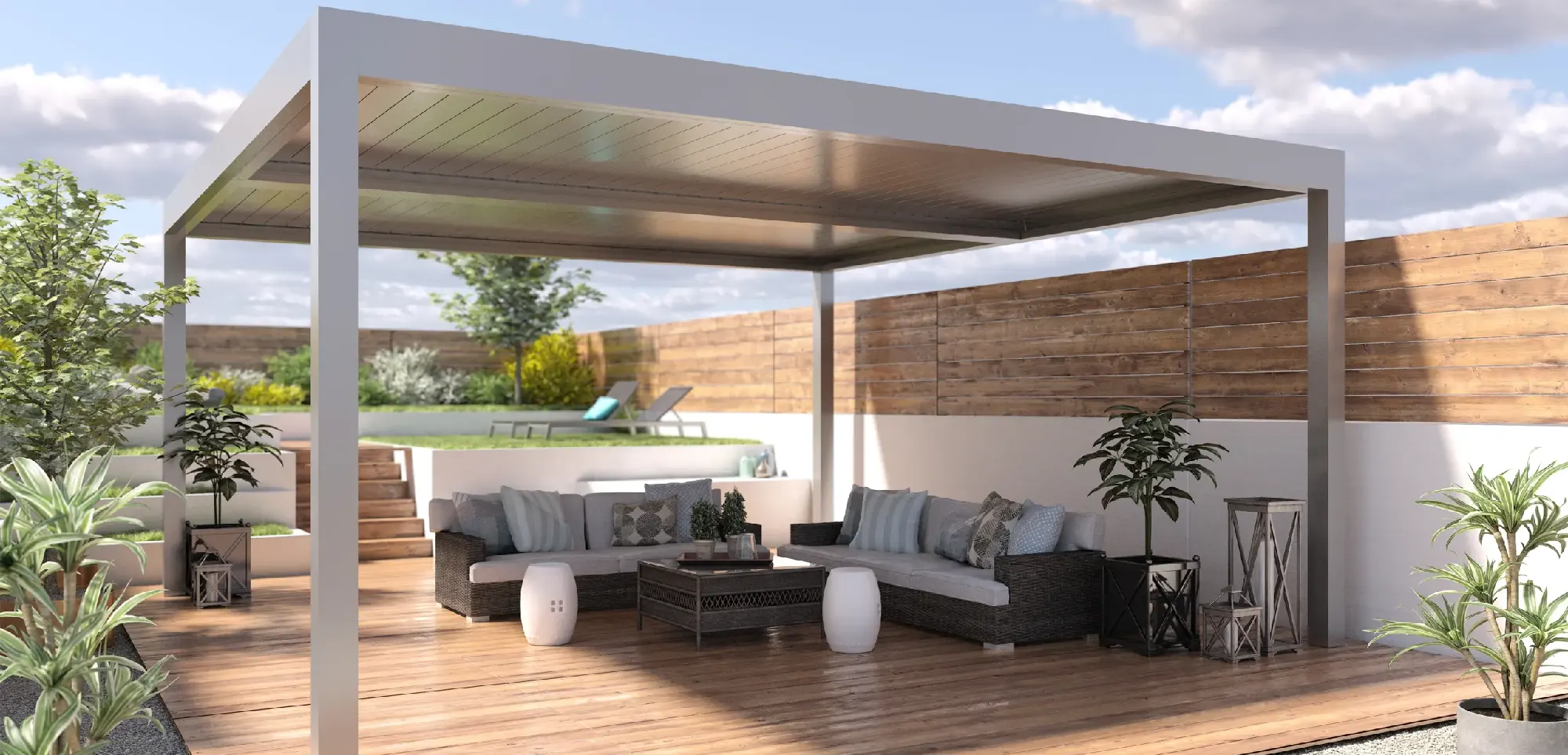
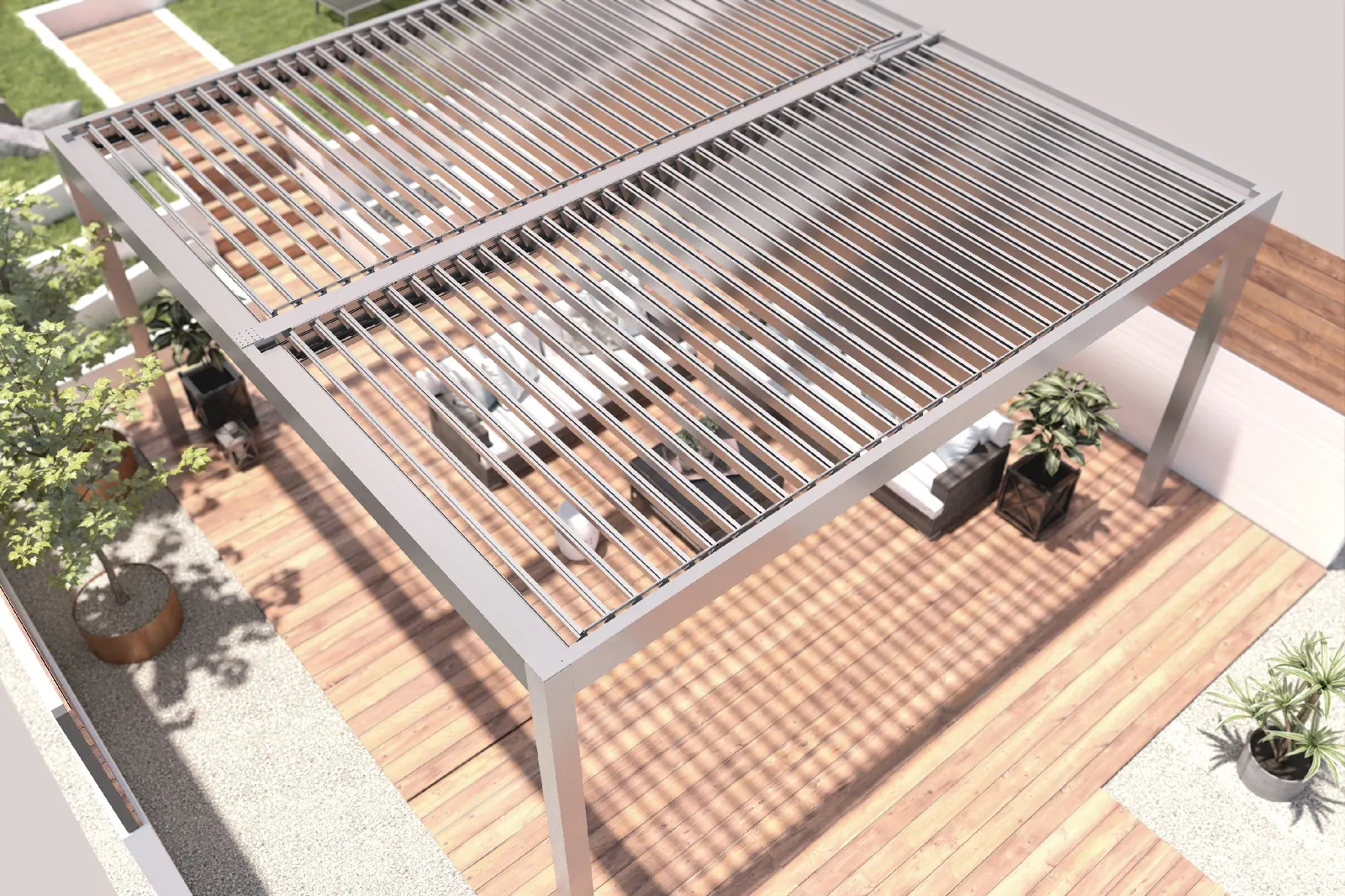
Bioclimatic pergolas are fully aluminium structures with a roof made up of adjustable louvers. These louvers can be opened or closed to regulate light entry, airflow, and protection against light rain or wind.

They are particularly well suited for:

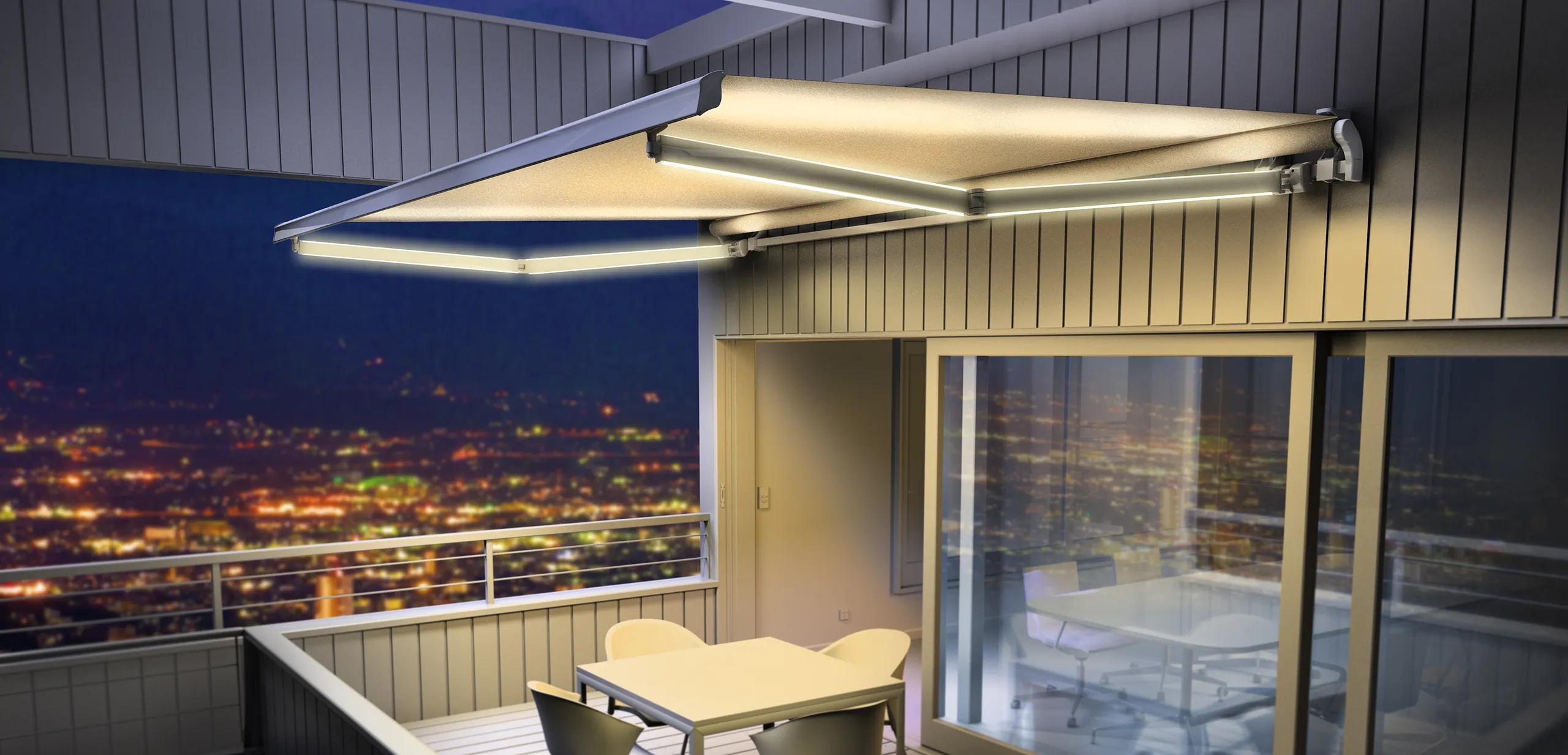
They typically feature motorised operation, concealed drainage systems, and increasingly, integrated LED lighting within the louvers or structural beams.

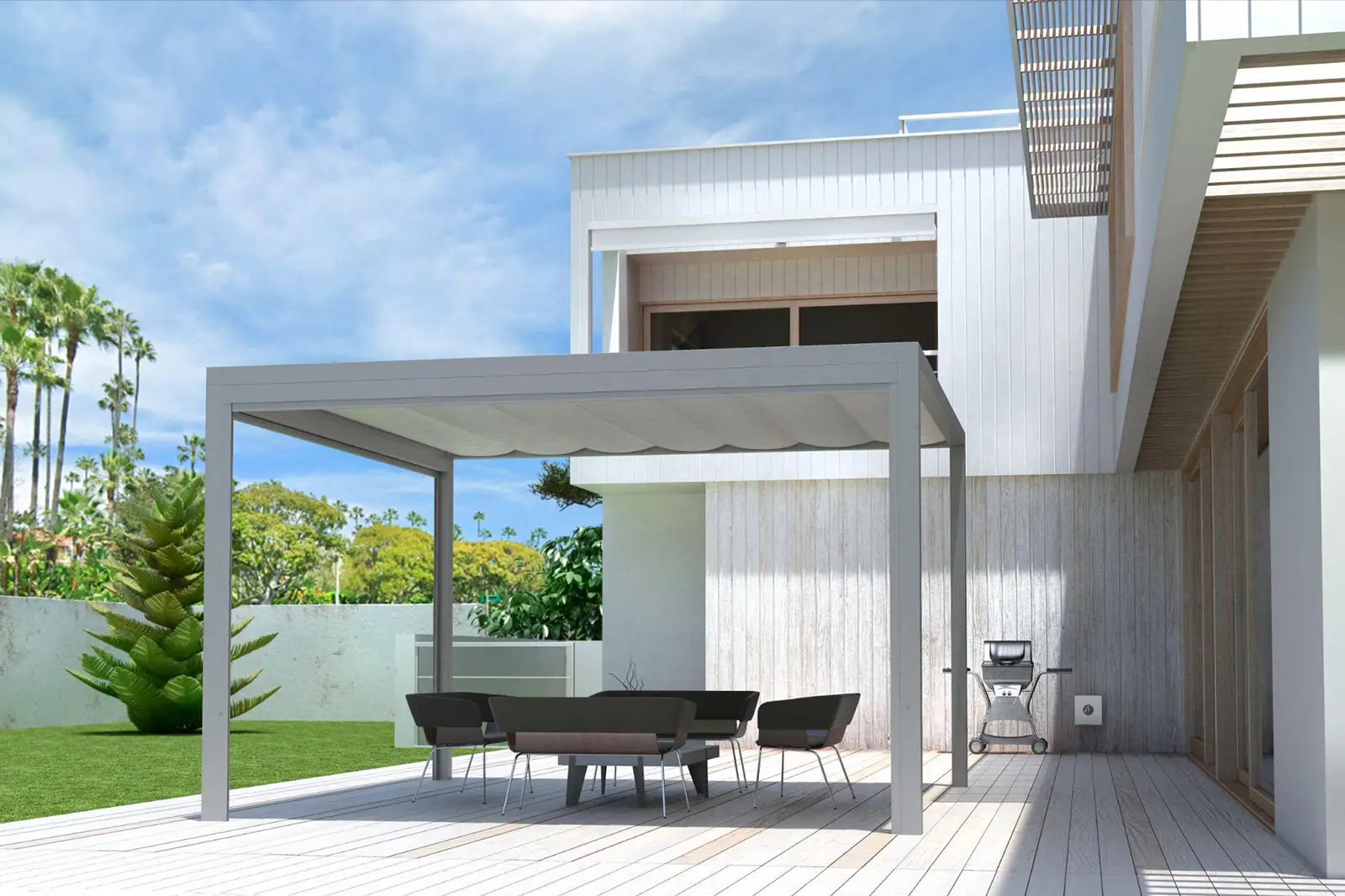
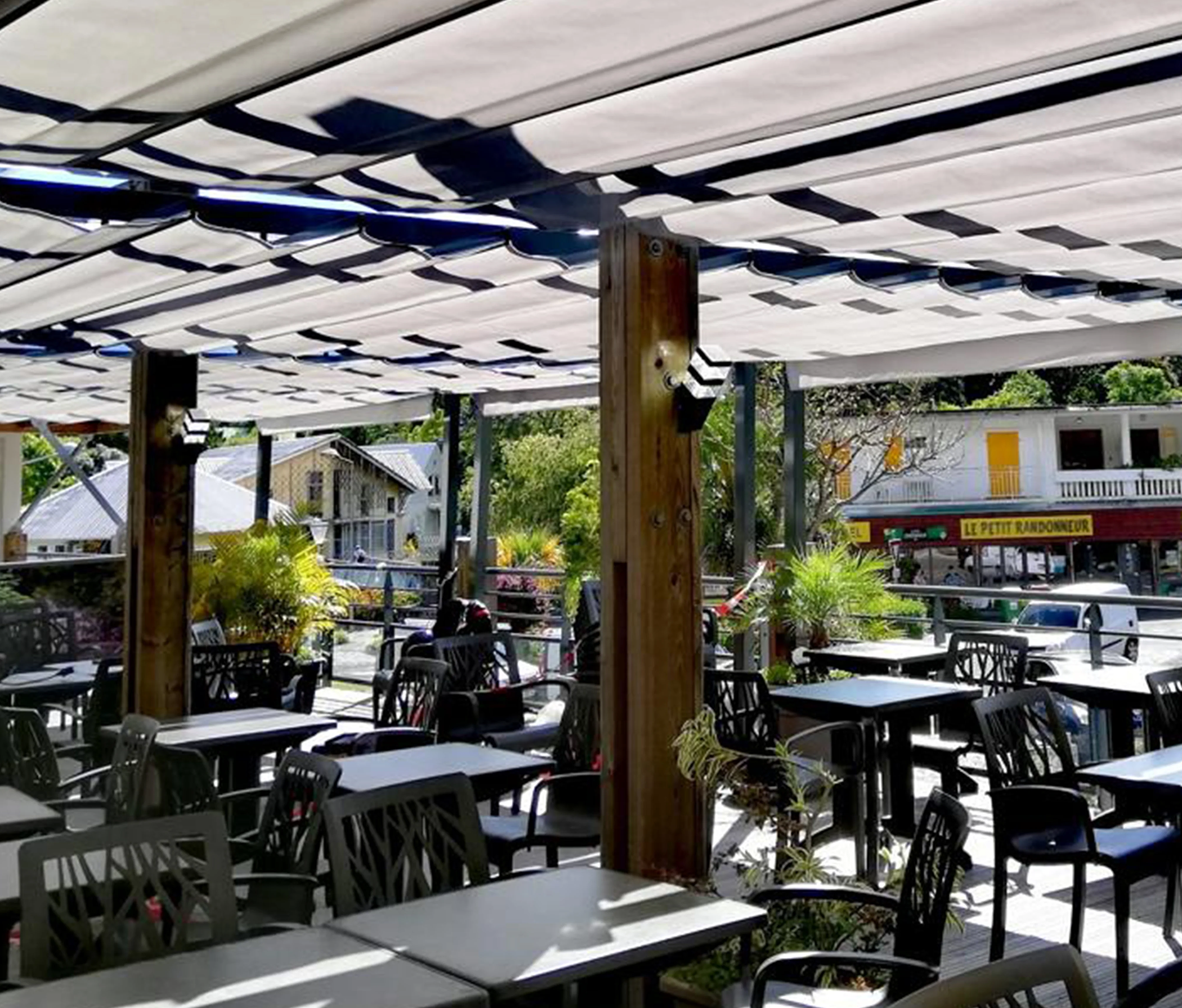
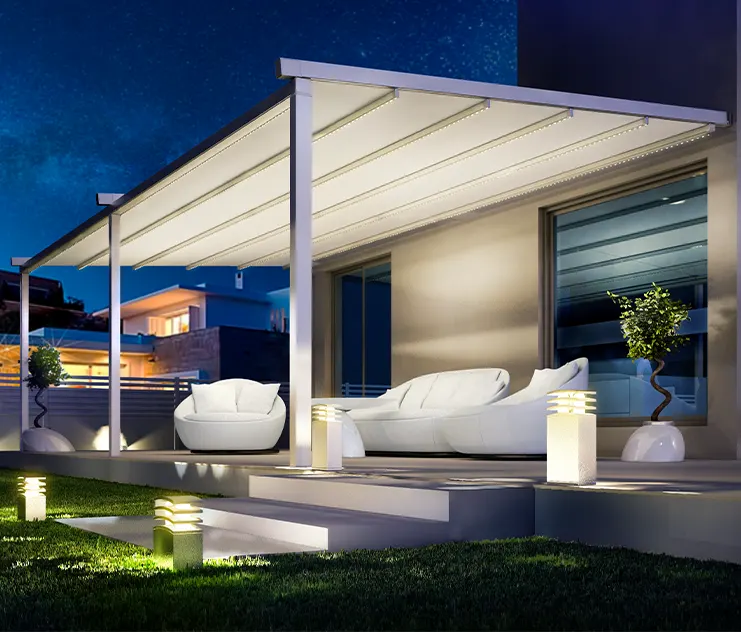
Tensioned fabric pergolas combine an aluminium or steel structure with a perfectly tensioned textile cover. They are designed to collect rainwater and channel it away through drainage points integrated into the structure itself.

They are an excellent choice for:

They can operate with fixed tensioned fabric systems or with retractable mechanisms that allow the space to be fully opened at specific times. The integration of LED lighting in beams or perimeter profiles is very common.

Flat awning pergolas

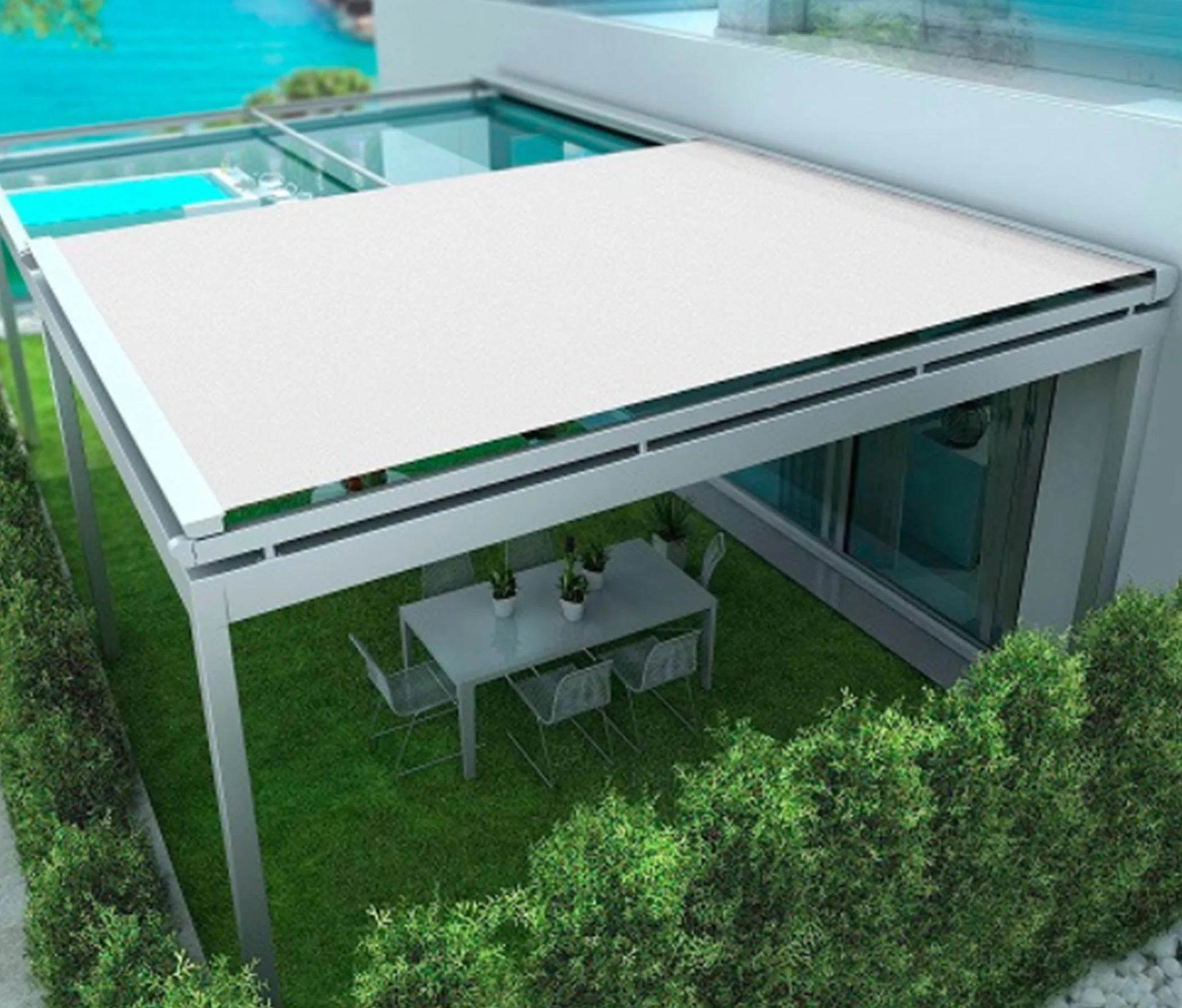
Flat awning pergolas are the most traditional solutions: a supporting structure with a fabric cover that spans the upper area, either horizontally or with a slight slope, whose main purpose is solar protection.

They are particularly well suited for:

In these systems, the fabric can be fixed or sliding on guide rails. Although their technical complexity is lower than that of a bioclimatic pergola, the quality of the structure and the proper tensioning of the fabric are essential to prevent water pooling and excessive movement caused by wind.

Any of these systems can be fitted with manual or motorised operation. In professional projects and for large-scale pergolas, motorisation is practically essential, both for ease of use and safety, especially when wind or rain sensors are incorporated.

In addition, the option to integrate LED lighting (in posts, beams, or louvers) turns the pergola into a space that can also be used at night, improving the return on investment for the end client.

Pergola materials: what installers need to consider

When choosing the right pergola for each project, the material of the structure is one of the key decisions. It directly affects strength, maintenance, and, to a large extent, the number of issues you may face in the future with that client. The market offers wood, steel, and aluminium pergolas, but not all of them perform equally well in professional use.

It is the material that best fits professional installation projects. It is lightweight, corrosion-resistant, and requires very little maintenance, which is essential when working in areas exposed to sun, rain, or saline environments. It allows the use of highly stable extruded profiles, offers lacquered finishes in the RAL colour range, and makes it possible to customise structures for each terrace or garden without increasing weight or installation complexity.

Steel provides very high mechanical strength, but it is heavier and requires constant anti-corrosion protection (painting, galvanising, periodic inspections). It usually makes sense for special or large-scale structures, where loads are very high and the project design justifies this type of solution.

Wood offers a warm aesthetic and may be suitable for very specific projects, but as an installer you must consider that it will require regular treatments, and that changes in humidity and temperature have a greater impact on the long-term stability of the structure.

If your goal is to reduce issues, speed up installation, and offer solid guarantees, aluminium pergolas are the most balanced option. They allow you to work with well-designed industrial systems that are reliable and repeatable, which is essential for delivering safe, durable, and efficient installations in every project.

Technical factors for choosing the right pergolas for patios and gardens

As an installer, your decision is not based solely on the visual appearance of the pergola. For the project to perform well over the long term, you must evaluate a series of technical factors: the actual dimensions of the space, the type of fixing system, climatic conditions, future maintenance, and compatibility with other solar protection systems or enclosures. These criteria are what truly make the difference between a simply functional installation and a fully professional solution.

Required dimensions and coverage

The first step is to accurately define which area needs to be covered and how it will be used. A pergola designed to shade a small private terrace is very different from a structure intended to cover the seating area of a restaurant.

As an installer, it is essential to carefully measure the depth, width, and available height, anticipate circulation paths, doors and windows, and take the solar orientation into account. With this information, you can select the most suitable type of pergola (bioclimatic, tensioned fabric, or flat awning) and dimension the structure so that coverage is sufficient without oversizing the system or complicating the installation.

Weather resistance

Another key factor for you as an installer is the actual exposure of the project: prevailing winds, frequent rainfall, humidity, possible snow, proximity to the sea, etc. Based on these conditions, you must determine the type of pergola and the level of structural reinforcement required.

Bioclimatic pergolas and tensioned fabric pergolas offer specific drainage and water evacuation solutions, while aluminium profiles and connection systems must be properly dimensioned to withstand local wind loads. By choosing a reliable structure from the outset, you reduce risks and avoid future interventions.

Maintenance and durability

Every decision you make in the design of the pergola has a direct impact on future maintenance. Materials such as lacquered aluminium, stainless steel fixings, and high-quality technical fabrics significantly reduce the need for repainting, adjustments, or replacements.

By choosing solutions of this kind, you not only improve the client’s experience, but also reduce after-sales calls and non-billable site visits. For a professional installer, a durable, low-maintenance pergola is synonymous with better margins and repeat customers.

Compatibility with accessories or enclosures

Many projects do not stop at the pergola itself: over time, the client may want to add glass enclosures, a specific type of awning technical curtains, lighting, or heating systems. That is why it is essential, from the very beginning, to choose a structure designed to accommodate these additional elements.

Working with modular aluminium systems makes it much easier to add accessories without forcing the structure or resorting to improvised solutions. This results in cleaner installations, fewer structural integrity issues, and more opportunities to expand the project with the same client.

Style and design: adapting to the final space

Even when the focus is primarily technical, design still matters. The pergola must fit the building’s architecture and the intended use of the space: clean lines and restrained finishes for modern homes; more robust structures for hospitality projects; and custom colours when there is a brand image to respect.

As an installer, choosing the right profile section, colour, and type of roof covering (louvers, tensioned fabric, or flat awning) allows you to offer solutions that not only perform well, but also enhance the overall project and reinforce your image as a professional who takes care of both the technical and aesthetic aspects.
The structure: the most important element for a durable pergo

As an installer, you know that a pergola is not judged solely by the fabric or louvers the client can see, but by the structure behind it. This is where it is truly decided whether the installation will be safe, stable, and durable, or whether issues such as deformation, water infiltration, or movement caused by wind will appear over time.

A well-designed pergola structure must be properly dimensioned for the project’s loads, use high-quality aluminium profiles, feature joints engineered to perform under tension and compression, and include anchoring systems adapted to the actual site conditions. When the foundation is solid, everything else—fabric, louvers, motorisation, and enclosures—performs better and results in fewer issues.

For this reason, when choosing pergola solutions for terraces and gardens, the primary criterion should always be structural quality. It is far better to work with proven systems, clear installation layouts, and specific components, rather than relying on improvised solutions that may eventually compromise your work and client satisfaction.

Siplan solutions: technical reliability and robust pergola structures for professional projects

At Siplan Ibérica we focus on the part that matters most to you as an installer: the structure. We design and manufacture aluminium structures for pergolas engineered to perform efficiently on site, featuring robust profiles, specific fittings, and solutions that enable fast and safe installation.

We always start from the technical requirements of the project: the dimensions of the terrace or garden, the type of fixing system, wind loads, the possibility of integrating tensioned fabric, bioclimatic systems, or a flat awning, as well as accessories such as enclosures. From there, we provide structures optimised for each case, achieving a true balance between strength, weight, and ease of installation.

Our goal is to enable you to deliver reliable installations, with fewer issues and a better experience for your client.

If you need support with the structural design of your upcoming pergola projects, or if you want to work with aluminium systems specifically developed for professionals, at Siplan Ibérica we can support you from the project planning stage through to the final solution.

Your partner in solar protection projects.

We provide you with reliable solutions, manufactured in Spain, with certified quality and a close-knit team that supports you at every stage.

Related news